//
Updated: October 17, 2026 | By RequestService Editorial Team
As temperatures begin to drop and the leaves change color, it's time to give your home some attention. Fall is one of the most important seasons for preventive maintenance, especially if you live in an area with freezing temperatures, heavy snowfall, or winter storms.
A little preparation now can help prevent frozen pipes, unexpected heating problems, roof leaks, and other expensive surprises.
The good news? You don't need to be a home improvement expert to get started. Many fall maintenance tasks are simple enough to handle yourself. Others are worth leaving to experienced professionals.
This fall home maintenance checklist covers 20 essential tasks to help protect your property, improve energy efficiency, and keep your family comfortable throughout winter.
Whether you own a newer house or an older property, here's what deserves your attention before cold weather arrives.
1. Heating and Home Safety: Get Ready for Colder Weather
Your heating system works hardest during winter. Preparing it ahead of time can reduce the likelihood of breakdowns when you need heat most.
1. Schedule a Professional Furnace Inspection
Don't wait until the first freezing night to discover your heating system isn't working properly.
Schedule a fall inspection with an HVAC professional who can evaluate your furnace or heat pump, check its operating condition, and identify potential problems.
According to ENERGY STAR, heating equipment should receive regular professional maintenance, ideally before the heating season begins.
When to hire a pro: If your furnace makes unusual noises, produces insufficient heat, or frequently shuts down.
2. Replace or Clean Your HVAC Air Filters
Dirty air filters restrict airflow and make heating equipment work harder than necessary.
Inspect your filters every month during heavy use. Replace disposable filters when dirty, following the manufacturer's guidance, or clean reusable filters according to their instructions.
Check that you are using the correct filter size and type for your equipment.
This simple part of your winter home maintenance routine can improve airflow and help protect your HVAC system.
3. Test Your Thermostat
Switch your thermostat to heating mode before cold weather arrives.
Confirm that the system responds correctly and reaches the temperature you select. If your thermostat uses batteries, check whether they need replacement.
For programmable or smart thermostats, review your winter heating schedule.
If the temperature displayed does not match the actual room conditions, or the system does not respond properly, arrange an inspection.
4. Inspect Your Fireplace and Chimney
A cozy fireplace can quickly become a safety concern if its chimney or venting system is neglected.
Before using a wood-burning fireplace or stove, have the chimney and heating equipment inspected and cleaned as needed by a qualified professional.
Check for damaged fireplace components and keep combustible materials away from heat sources.
The U.S. Fire Administration recommends annual professional inspection and maintenance of heating equipment and chimneys.
5. Test Smoke and Carbon Monoxide Alarms
Heating season makes properly functioning safety alarms especially important.
Test every smoke and carbon monoxide alarm according to the manufacturer's instructions. Replace batteries when required and replace expired devices.
Make sure alarms are installed in appropriate locations according to local codes and manufacturer guidance.
Important: If a carbon monoxide alarm activates, get everyone outside immediately and call emergency services. Never ignore the warning.
2. Windows, Doors, Roofing, and Insulation
The exterior of your home is the first line of defense against wind, rain, snow, and freezing temperatures.
These fall home maintenance tips can help keep conditioned air inside and moisture outside.
6. Seal Drafts Around Windows and Doors
Feel cold air coming through a closed window? Notice daylight beneath an exterior door?
These are signs that weatherstripping, caulking, or door seals may need attention.
Inspect window frames, exterior doors, and accessible gaps around your home. Replace worn weatherstripping and use appropriate sealant on stationary joints.
Don't block required ventilation openings or drainage paths.
If windows have rotting frames, persistent condensation between panes, or major damage, professional repair or replacement may be necessary.
7. Check Attic Insulation and Air Sealing
Heat escaping into an unconditioned attic can increase energy consumption and contribute to ice-dam problems in snowy climates.
Look for obvious insulation gaps, moisture stains, and signs of roof leaks from safe, accessible areas.
The U.S. Department of Energy recommends addressing insulation and air leakage as part of a whole-home weatherization approach.
Do not disturb suspected asbestos-containing materials or seal around chimneys and hot equipment without the correct fire-rated materials and installation methods.
Consider a professional energy assessment if your home consistently feels drafty.
8. Inspect Your Roof Before Snow Arrives
Your roof must withstand rain, snow, wind, and seasonal temperature changes.
From the ground, use binoculars to look for missing shingles, damaged flashing, loose roof components, and visible deterioration.
Inside your attic, investigate new moisture stains or damp insulation.
Don't climb onto a steep, wet, icy, or otherwise unsafe roof. A roofing professional can perform a more thorough evaluation and recommend appropriate repairs.
Addressing a minor leak before winter is usually far less disruptive than dealing with water entering your home during a storm.
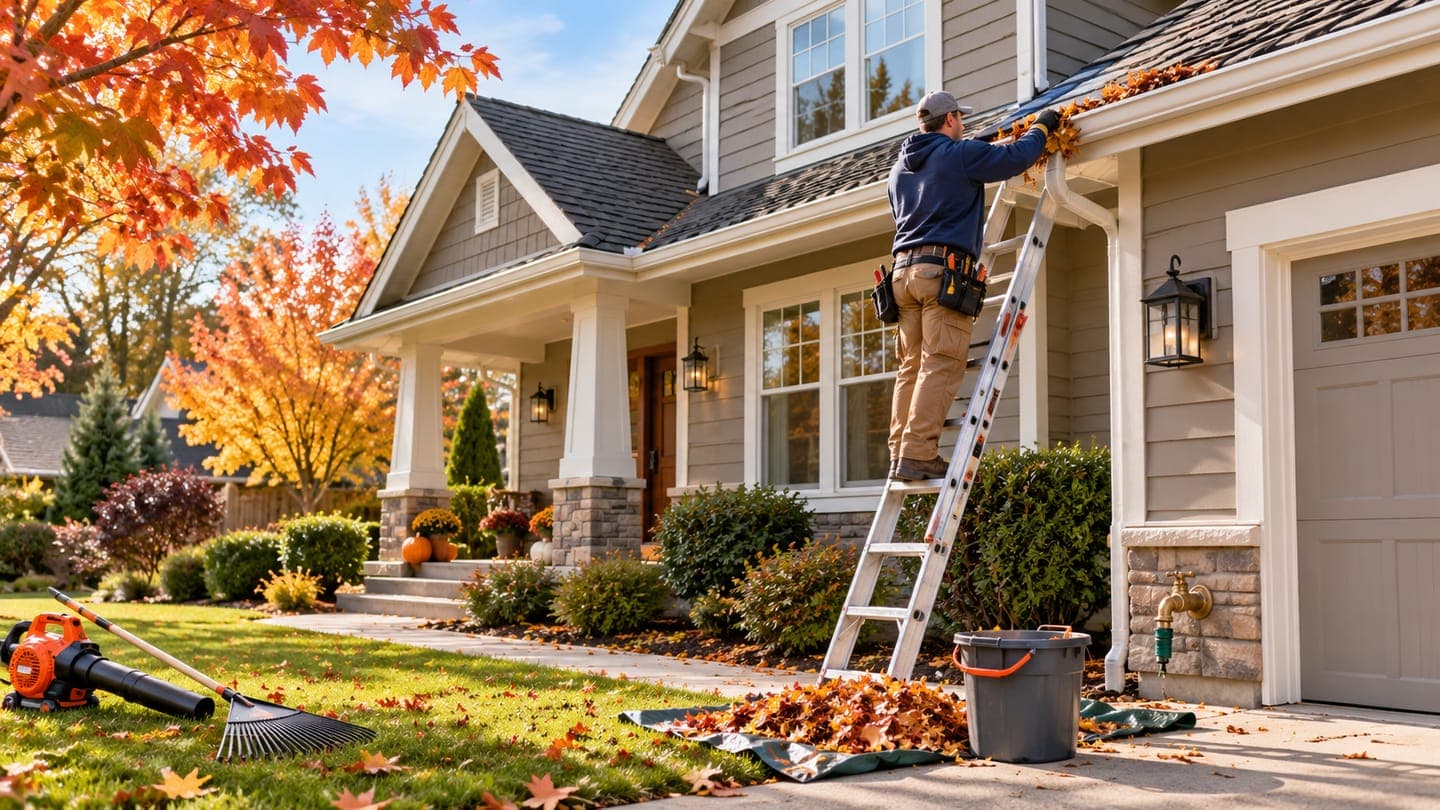
9. Clean Gutters and Downspouts
Fallen leaves, twigs, and other debris can clog gutters and interrupt proper drainage.
When water cannot flow freely, it may overflow near your home's foundation or contribute to winter drainage problems.
Remove debris from accessible gutters only when it can be done safely. Check that downspouts are properly connected and direct water away from the foundation.
Homes surrounded by large trees may need more than one cleaning during fall.
When to hire a pro: If your gutters are high above the ground, difficult to access, damaged, or regularly overflowing.
10. Inspect Exterior Siding and Caulking
Walk around your property and inspect the exterior walls.
Look for loose siding panels, cracked trim, deteriorated sealant, damaged paint, and visible gaps around penetrations.
Moisture entering behind siding can damage underlying materials, particularly when freezing and thawing cycles occur.
Repair small problems with appropriate materials, or contact a siding professional if there are signs of extensive deterioration.
Pay special attention to areas around windows, doors, and exterior fixtures.
3. Plumbing, Drainage, and Outdoor Maintenance
A thorough home maintenance checklist should address plumbing and drainage before freezing temperatures make repairs more difficult.
11. Check Foundation Drainage and Sump Pumps
Water should drain away from your house rather than collect against its foundation.
Check the soil around the foundation for settling, low spots, or drainage problems. Inspect accessible downspout extensions and drainage outlets.
If your home has a sump pump, test it according to the manufacturer's directions and verify that its discharge line is clear.
For homes prone to basement flooding, consider having a professional evaluate the pump's capacity and backup power options.
12. Trim Hazardous Trees and Branches
Strong winds, ice, and heavy snowfall can damage weak tree limbs.
Inspect trees near your house, driveway, power lines, and outdoor structures.
Remove small fallen branches and loose yard debris, but leave large or elevated branches to experienced tree-care professionals.
Never attempt to trim branches near electrical lines yourself.
An arborist can help identify hazardous limbs or unhealthy trees that could damage your property during a storm.
13. Disconnect and Store Garden Hoses
One of the easiest ways to winterize a house is to disconnect outdoor garden hoses before freezing temperatures arrive.
Drain the hoses and store them in a protected location.
For exterior faucets connected to interior shutoff valves, follow the correct winterization procedure for your plumbing system.
Even some frost-resistant faucets can be damaged if a hose remains connected and traps water.
14. Winterize Your Sprinkler System
If you have an irrigation system in a freezing climate, proper winterization is important.
Water trapped in pipes, valves, and sprinkler components can freeze, expand, and damage the system.
Depending on the design, winterization may involve draining pipes, shutting off the water supply, and using specialized equipment.
Professional sprinkler winterization is particularly worthwhile for systems requiring compressed-air blowouts, which can be hazardous if performed incorrectly.
15. Protect Exposed Water Pipes
Pipes in unheated crawl spaces, garages, exterior walls, and other cold locations may be vulnerable to freezing.
Inspect accessible plumbing for missing insulation, exposed sections, and cold-air entry points.
Use appropriate pipe insulation and address drafts in surrounding building materials.
The National Weather Service recommends insulating vulnerable pipes and disconnecting outdoor hoses before extreme cold.
If you suspect a pipe has frozen, do not use an open flame to thaw it. Contact a plumber when necessary.
16. Locate Your Main Water Shutoff Valve
Could you stop the water supply quickly if a pipe suddenly burst?
Every homeowner should know where the main water shutoff valve is located and how to operate it.
Make sure the valve is accessible, clearly identifiable, and in working condition.
Check under sinks, around toilets, and near water heaters for signs of leaking connections.
Do not force a corroded or stuck valve. A qualified plumber can inspect or replace it.
Knowing how to stop the water quickly can greatly reduce damage during a plumbing emergency.
4. Fire Prevention, Outdoor Safety, and Emergency Preparation
Completing your winter home preparation checklist means thinking beyond heating and plumbing.
Winter storms can also interrupt power, create slippery conditions, and make routine outdoor tasks more difficult.
17. Clean Your Dryer Vent
Dryer lint accumulation can create a fire hazard and restrict airflow.
Clean the lint filter regularly and inspect the accessible portion of the venting system for damage or blockages.
Make sure the exterior dryer vent opens correctly while the appliance runs.
The U.S. Fire Administration recommends cleaning dryer vent ductwork annually.
Arrange professional cleaning if the duct is difficult to access or has substantial lint buildup.
18. Inspect Outdoor Walkways, Steps, and Lighting
Cracked concrete, loose handrails, uneven steps, and poor lighting become more dangerous when covered with snow or ice.
Walk around your property and identify areas that may create slipping or tripping hazards.
Repair unstable handrails, improve lighting near entrances, and address damaged walkways before winter.
Make sure snow shovels and appropriate ice-control products are accessible before the first storm.
19. Prepare Outdoor Equipment and Seasonal Fixtures
Before winter begins, inspect outdoor equipment and seasonal fixtures.
Clean and store lawn equipment according to the manufacturer's instructions. Secure lightweight outdoor furniture and protect items that could be damaged by freezing weather.
Drain water from outdoor features when required, and follow proper storage procedures for fuel-powered equipment.
Store gasoline and other flammable materials only in approved containers and suitable locations away from living spaces and ignition sources.
20. Prepare for Winter Storms and Power Outages
Even a well-maintained home can lose electricity during severe winter weather.
Prepare a household emergency kit with drinking water, nonperishable food, medications, flashlights, batteries, and other necessities.
Keep phones charged when severe weather is forecast, and consider how household members who rely on electrically powered medical equipment will manage an outage.
If using a portable generator, operate it outdoors at least 20 feet from doors, windows, and vents, following the manufacturer's instructions.
Never run a generator inside a garage or use a gas oven to heat your home. These situations can cause dangerous carbon monoxide exposure.
When Should You Complete Fall Home Maintenance?
The best schedule depends on your climate. Homeowners in Minnesota, Colorado, and Maine may need to begin winter preparation earlier than those in warmer southern states.
A practical schedule is:
| Timeframe | Recommended tasks |
|---|---|
| Early September | Schedule HVAC inspections, evaluate roofing, inspect windows and doors |
| Late September | Inspect insulation, plumbing, drainage, and outdoor structures |
| October | Clean gutters, prepare sprinkler systems, disconnect garden hoses |
| Before the first freeze | Protect vulnerable pipes, complete urgent repairs, test heating |
| November | Recheck gutters after leaf fall, prepare emergency supplies, monitor storm forecasts |
Follow local weather forecasts rather than relying on the calendar alone.
Which Fall Maintenance Tasks Need a Professional?
Many homeowners can safely replace air filters, inspect accessible exterior areas, and disconnect hoses.
However, professional assistance may be appropriate for projects involving specialized equipment, electrical hazards, steep roofs, major plumbing issues, or work at height.
Consider hiring a professional for:
- Heating and cooling: Furnace inspections, heat pump maintenance, and heating repairs.
- Plumbing: Frozen-pipe prevention, damaged supply lines, and leaking shutoff valves.
- Roofing and gutters: Roof inspections, damaged flashing, and difficult-to-access gutters.
- Insulation and weatherization: Attic insulation, air-sealing improvements, and window repairs.
- Outdoor services: Hazardous tree removal, drainage improvements, and sprinkler winterization.
For larger repairs, request a written estimate, confirm applicable licensing and insurance requirements, and ask about the proposed scope of work before hiring.
Need Help Preparing Your Home for Winter?
You don't have to tackle every maintenance project yourself.
Whether your home needs heating maintenance, plumbing repairs, gutter cleaning, roofing work, or seasonal outdoor services, RequestService can be your starting point for finding home service professionals.
Describe what needs attention, identify the type of service you need, and take the next step toward getting your home winter-ready.
Frequently Asked Questions About Fall Home Maintenance
1. What is the most important fall home maintenance task?
Preparing your heating system and addressing immediate safety hazards are among the highest priorities. Schedule necessary heating maintenance, test smoke and carbon monoxide alarms, and investigate problems that could lead to water damage or fire.
Homes in freezing climates should also prioritize protecting exposed plumbing.
2. When should I start preparing my house for winter?
Start four to eight weeks before freezing weather is normally expected in your area. This gives you time to schedule contractors, obtain materials, and complete essential tasks before temperatures drop.
In warmer regions, focus more on seasonal rain, drainage, wind, and heating-system readiness as appropriate.
3. How often should I clean my gutters in the fall?
At least once after significant leaf fall is a useful starting point, but properties surrounded by trees may need multiple cleanings.
Inspect your gutters after major storms and address overflowing or blocked sections promptly.
4. Can I complete my fall home maintenance checklist myself?
Many tasks are suitable for homeowners, including changing accessible air filters, disconnecting hoses, and checking alarms.
Roof repairs, chimney inspections, major electrical work, and complex plumbing repairs are generally better handled by qualified professionals.
Never attempt a DIY task that puts you at risk of falling, electrocution, fire, or gas exposure.
5. How can I prevent frozen pipes during winter?
Insulate vulnerable pipes, seal cold-air leaks, disconnect outdoor hoses, and follow the proper procedures for winterizing exterior faucets and irrigation systems.
During extreme cold, follow local emergency guidance about protecting plumbing.
Knowing where the main water shutoff is located is also important in case a pipe bursts.
6. How much does fall home maintenance cost?
Costs depend on your home's size, condition, location, and the services required.
Simple tasks such as checking alarms or disconnecting hoses may have minimal material costs. Professional furnace maintenance, gutter cleaning, roof repairs, and insulation upgrades vary considerably.
For an accurate budget, obtain itemized estimates from local professionals and prioritize safety-critical repairs before cosmetic improvements.
Final Thoughts: Protect Your Home Before Winter Arrives
Fall home maintenance doesn't have to be overwhelming.
Start with the most important safety checks, then work through your heating system, exterior, plumbing, and outdoor areas.
A thoughtful approach to preventive maintenance can help you catch small problems before they become expensive repairs and make your home more comfortable throughout the colder months.
Ready to get started? Visit RequestService.com to explore home service assistance and find the right next step for your winter preparation projects.
RequestService Home Maintenance Guide | Updated October 2026


